

The Securities and Exchange Board of India (Sebi) is likely to notify soon stricter derivatives trading norms aimed at curbing speculative trading activity and curtailing losses of over Rs 50,000 crore incurred by retail investors every year. Based on the feedback received from industry participants, seven measures proposed by the market regulator in a consultation paper in July may be implemented with minor tweaks ahead of its forthcoming board meeting, said sources.

Court interventions turn the tables on forex derivative losses, as banks push for out-of-court settlements.

It will be the first to go, in what has become an overcrowded segment since India first allowed futures trading in commodities in 2003.
The market regulator's newly proposed selection criteria for the over Rs 400-trillion-a-day futures and options (F&O) market could pave the way for the entry of popular stocks such as Life Insurance Corporation (LIC) of India, Jio Financial Services, Zomato, Paytm, DMart, and Adani Energy into the derivatives segment. The Indian derivatives market, which accounts for most of the trading volumes, could see big churn with over two dozen exits from the current list of 182 stocks due to an upward revision in the eligibility thresholds.
Sabare International, a Karur-based home furnishings company, has taken ICICI Bank to court over a foreign exchange derivative contract. The company has requested the Karur civil court to declare the contract void. This is the second company to have gone into a legal dispute with ICICI Bank after the Chennai-based Sundaram Multi Pap, which had alleged "mis-selling of certain foreign exchange derivative contracts for speculative purposes".

Finance Minister Nirmala Sitharaman on Tuesday said the securities transaction tax (STT) will be increased on futures and options (F&O) trade from October 1 to discourage retail investors from investing in the risky instrument.
An analysis by the Securities and Exchange Board of India (Sebi) has revealed that retail traders remain at the wrong end of the stick when it comes to equity derivatives trading. About 93 per cent of them incurred an average loss of Rs 2 lakh (per trader) during the last three financial years. The new report highlights an increase in the loss-making individual investors in futures and options (F&O) to 91.1 per cent in FY24 compared to 89 per cent in FY22.
India allows derivatives trading in 31 more stocks
The income tax authorities have put banks and companies disclosing losses in their foreign exchange derivative structures under the scanner. Banks and companies have been called to explain the extent of losses and structures initiated in both Indian and overseas markets through their branches and subsidiaries. The income tax department will then ascertain whether banks and companies entered into transactions to hedge their portfolio or for purely speculative purposes.

The Securities and Exchange Board of India (Sebi) on Monday approved the introduction of a new asset class, designed to offer greater flexibility to fund managers and target investors with a higher risk appetite. The markets regulator also cleared the liberalised Mutual Funds Lite (MF Lite) framework, aimed at fund houses that solely launch passively managed schemes. In another significant move, the board reduced the timeframe for rights issues from the current 317 working days to just 23.

Co-location attracts institutional investors, which drives volumes for long-dated options, with higher realisations at lower costs.

The Nifty 50 index is poised for a revamp as the revised futures and options (F&O) stock selection criteria is seen paving the way for newly listed companies to join the benchmark index, which is tracked by passive funds with combined assets under management of more than ~3.5 trillion ($44 billion). For the first time in six years, the market regulator Securities and Exchange Board of India (Sebi) has tweaked the stock selection process for the derivatives segment that clocks a turnover of ~400 trillion daily.
Insurance Regulatory and Development Authority is consulting market watchdog Securities and Exchange Board of India before allowing insurers to invest in derivative products while planning to introduce a system of risk-based capital assessment by 200

Trading turnover on NSE IX has been witnessing an uptrend and this momentum is likely to continue thanks to the growing global interest in the overall India growth trajectory, MD & CEO of NSE International Clearing Neeraj Kulshrestha has said. Speaking at the Singapore Fintech Festival (SFF) on Monday Kulshrestha said foreign investors are likely to further increase their participation in GIFT City NIFTY.

'It is important India to stay focussed on its primary national objectives: Combating terrorism; not losing sight of other security and strategic concerns (on the Sino-Indian front for instance); ensuring a strong economy and registering growth which includes improving the lot of common people; and finally making certain that the social fabric remains intact and harmony among people is not jeopardised, at least any further,' asserts Nilanjan Mukhopadhyay.
The stock exchange BSE has called off the merger of its unit at the Gujarat International Finance Tec-City International Financial Services Centre (GIFT IFSC), India International Exchange (India INX), with NSE International Exchange (NSE IX), a similar unit floated by rival National Stock Exchange (NSE), according to sources familiar with the development. BSE and NSE had been in discussions for the merger for over a year, but it has yielded no results, they said.

Fears that these firms are creating volumes by trading among themselves to lure small investors.

The Indian equity market clocked record average daily turnover (ADTV) in both the cash and derivatives segments in February amid a spike in volatility. The ADTV for the cash segment for both the exchanges combined came at Rs 1.27 trillion, while the same for the derivatives or the futures and options (F&O) segment stood at Rs 483 trillion in the previous month. The volumes for both cash and derivatives have almost doubled from a year ago on the back of rising retail participation in the world's fourth largest equity market.
Given how Participatory Notes are essentially an OTC market for Indian equity derivatives, moving them onshore should be an important objective.
The BSE faces a larger outgo after regulatory clarity on the fee to be paid to the Securities and Exchange Board of India (Sebi) as a turnover charge on options volume. The market regulator on Friday directed the exchange to pay a regulatory fee on the 'notional value' of annual turnover.
The MCX Stock Exchange has dragged the market regulator to court. In a writ petition filed on July 16 in the Bombay High Court, the exchange has sought a response from the Securities and Exchange Board of India on its application for permission to operate as a full-fledged stock exchange.
The legal counsel for Coimbatore-based Rajshree Sugars and Chemicals (RSCL) said the company would appeal against the Madras High Court order, which held that the company's derivatives contract with Axis Bank is valid.
Auto parts-maker Amtek Auto today joined a growing list of Indian companies that are sitting on notional losses on account of their exposure to foreign exchange derivatives. Amtek today informed the stock exchanges that it could potentially make a loss of up to $18 million (Rs 72.18 crore) in the next two years on its exposure to currency hedges and swaps.

RBI banned banks from proprietary trading and Sebi doubled the margin requirement on the domestic dollar-rupee forward trade.

Kamlesh Chandra Varshney, a whole-time member of the Securities and Exchange Board of India (Sebi), said on Friday that the market regulator in the last three months had removed around 15,000 content sites linked to unregistered finfluencers or providing unauthorised investment advice. Speaking at the Global Fintech Fest, he said there was successful engagement with the technology providers who are complying with the regulator's request.
The Bombay Stock Exchange and Foreign Exchange market will remain closed today due to a terrorist attack in Mumbai.

In the first major international exchange business initiative by an Indian entity, a new commodity and currency bourse, Singapore Mercantile Exchange (SMX) on Tuesday commenced trading here with derivatives contracts like gold, crude oil and Euro-US dollar.
Bombay Stock Exchange (BSE) shares have lost more than a third of their value in the last six months, as a lacklustre market has hurt volumes in the exchange's cash segment and several efforts to revive its derivatives segment are yet to show results.
Close on heels of the launch of Gift Nifty (earlier SGX Nifty), domestic exchanges are pushing for extension of trading hours for the onshore derivatives market, said sources. Bourses are waiting for a final approval from market regulator Sebi on the proposal to keep the derivatives market open for longer hours, they said. The move is aimed at attracting more trading members for onshore futures and options (F&O) contracts amid risk that global investors could prefer trading at Gift City given the tax benefits.

Among the Sensex firms, Tata Steel, Tata Motors, Asian Paints, Wipro, State Bank of India and Larsen & Toubro were the major gainers. ICICI Bank, NTPC, Axis Bank and Mahindra & Mahindra were among the laggards.
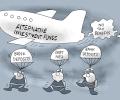
Around Rs 1 trillion, or a fifth of the investments made by alternative investment funds (AIFs) are questionable in terms of the intent behind the investments and are under the scanner for circumvention of regulations, said Ananth Narayan, whole-time member of Securities and Exchange Board of India (Sebi). AIFs are pooled investment vehicles that invest in a variety of assets including real estate, startups, unlisted companies, and derivative strategies in the listed space.
The BSE has decided to move the expiry day of Bankex derivatives contracts from Friday to Monday, effective October 16, the bourse said on Wednesday. "New contracts of S&P BSE Bankex with Monday expiry will be generated on October 13, 2023, and will be available for trading with effect from October 16, 2023," the BSE said, citing the decision was based on the market feedback. The expiry of Sensex derivatives contracts will continue to be on Friday.

If you already hold significant amounts of equity in your portfolio, avoid MAAFs with over 60 per cent equity. But if you lack equity exposure, an aggressive MAAF may be appropriate.
The Securities and Exchange Board of India (Sebi) plans to mandate the UPI block mechanism, also known as the ASBA-like facility, in the secondary market for Qualified Stock Brokers (QSBs). QSBs are brokers with larger client sizes and thus more significance in the market ecosystem.
The Nifty Options would add to SGX's suite of Asian equity derivatives, which include SGX S&P CNX Nifty futures, the dominant Indian product for international participants.
Intercontinental Exchange, which trades in energy derivatives, is in talks to buy ICICI Bank's holding in the National Commodities and Derivative Exchange.
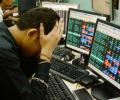
Shares of brokerages and market infrastructure institutions (MIIs) witnessed heavy selling pressure following the Securities and Exchange Board of India's (Sebi's) pivot to a uniform fee structure, which analysts fear could dent revenues. Discount brokerages, which currently benefit from a spread between client charges and exchange fees, are expected to be most affected. Shares of Angel One, the third-largest brokerage by active clients, fell 8.7 per cent. Groww and Zerodha, the largest brokerages, are not publicly listed.
